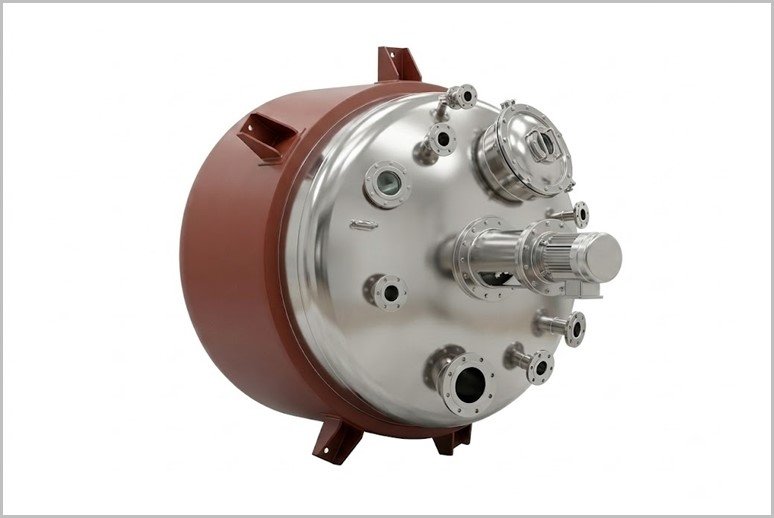
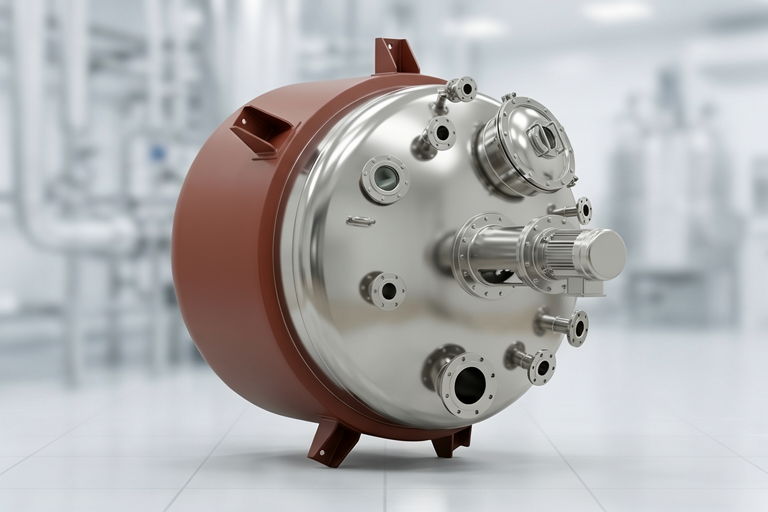
A jacketed reactor for resin and paints is an advanced, heavy-duty stainless steel pressure vessel meticulously engineered to handle complex chemical syntheses, intensive mixing, and precise thermal management. Widely utilized across the polymer and coating sectors, these specialized reaction vessels are indispensable for synthesizing high-performance synthetic resins—including alkyd, unsaturated polyester, epoxy, phenolic, and acrylic resins—as well as specialized architectural and industrial paints.
By combining robust structural integrity with sophisticated heat transfer systems, a jacketed reactor provides a secure, optimized environment for chemical processing.
Why Precise Temperature Management Matters in Resin Synthesis
The production of synthetic resins and coatings relies heavily on chemical synthesis routes that are frequently exothermic (releasing large amounts of thermal energy rapidly). Without strict, real-time thermal regulation, runaway reactions can compromise batches, alter polymer chain lengths, cause gelation failures, or introduce severe safety hazards like over-pressurization and vessel damage.
A high-quality jacketed reaction vessel mitigates these operational risks through a dual-shell configuration:
The Inner Shell (Reaction Chamber): Houses the raw chemical ingredients, solvents, and catalysts, keeping them isolated from heating/cooling media while withstanding internal vacuum or pressure conditions.
The Outer Jacket or Limpet Coil: Circulates thermal fluids—such as high-temperature heating oil, saturated steam, or chilled water—to safely add heat during initial polymer melting stages or extract surplus exothermic heat during active polymerization.
Uses in Resin and Paints Production:
A jacketed reactor for resin and paints is a heavy-duty stainless steel pressure vessel designed for complex chemical syntheses, intensive mixing, and precise thermal management. It is widely used in the polymer and coating industries to produce high-performance synthetic resins (alkyd, unsaturated polyester, epoxy, phenolic, and acrylic) as well as architectural and industrial paints.
Many resin-forming reactions are highly exothermic and release large amounts of heat quickly. Without accurate, real-time temperature regulation, runaway reactions can occur, leading to compromised batches, altered polymer chain lengths, gelation failures, over-pressurization, or vessel damage. The jacketed design prevents these risks.
The reactor has an inner shell (reaction chamber) that holds the raw chemicals, solvents, and catalysts, isolated from the heating/cooling media and able to withstand vacuum or pressure. The outer jacket (or limpet coil) circulates thermal fluids such as high-temperature heating oil, saturated steam, or chilled water to add or remove heat as needed during melting or polymerization stages.
It is suitable for synthesizing alkyd, epoxy, phenolic, acrylic, and unsaturated polyester resins. It supports key reactions including esterification, polymerization, and emulsification, and helps control viscosity and achieve the desired molecular weight through uniform heating and cooling.
The external jacket supports multiple media, including thermal oil, steam, and hot water for heating, as well as chilled water or other cooling fluids. This enables precise temperature control and effective heat removal during exothermic reactions to maintain product quality.
The reactor is equipped with efficient agitation systems such as anchor, paddle, or frame-type agitators specifically designed to handle high-viscosity resins and ensure thorough, uniform mixing without hotspots.
The reactor is typically constructed from stainless steel grades SS 304 or SS 316. These materials provide excellent corrosion resistance, durability, and compatibility with the aggressive chemicals used in resin and paint production, while also offering leak-proof performance and easy-to-clean polished interiors.
Yes. It offers vacuum and pressure capability, which is useful for dehydration processes and solvent recovery during resin manufacturing, enhancing process efficiency and product consistency.
Optional features include insulation for energy efficiency, PLC-based automation for precise process control, and various safety systems. These enhancements improve operational safety, consistency, and ease of use in industrial settings.
It is ideal for the production of paints, coatings, adhesives, inks, emulsions, and pigment processing. It is frequently integrated into complete production lines in the chemical, polymer, and coating sectors (and can also serve related industries that require similar controlled reaction vessels).
Algeria | Angola | Argentina | Australia | Austria | Bahrain | Bangladesh | Belarus | Belgium | Bolivia | Botswana | Brazil | Bulgaria | Canada | Chile | China | Colombia | Costa Rica | Cuba | Czech Republic | Denmark | Dominican Republic | Ecuador | Egypt | El Salvador | Ethiopia | Finland | France | Germany | Ghana | Greece | Guatemala | Haiti | Honduras | Hong Kong | Hungary | India | Indonesia | Iran | Ireland | Israel | Italy | Ivory Coast | Japan | Jordan | Kazakhstan | Kenya | Kuwait | Lebanon | Libya | Malaysia | Mexico | Mongolia | Morocco | Mozambique | Myanmar | Netherlands | New Zealand | Nicaragua | Nigeria | Norway | Oman | Pakistan | Panama | Paraguay | Peru | Philippines | Poland | Portugal | Qatar | Romania | Russia | Saudi Arabia | Senegal | Slovakia | Singapore | South Africa | South Korea | South Sudan | Spain | Sri Lanka | Sweden | Switzerland | Taiwan | Tanzania | Thailand | Trinidad and Tobago | Tunisia | Turkey | Uganda | Ukraine | United Arab Emirates | United Kingdom | United States | Uruguay | Uzbekistan | Venezuela | Vietnam | Zambia | Zimbabwe
Connect with our engineering team to discuss your specific production requirements. We provide customized, cGMP-compliant machinery solutions designed to optimize your manufacturing facility and maximize output.
©Adinath International | Theme Developed By Pharma Machinery Manufacturer I Website updated on: 15 October 2026
Request A Quick Quote
Jacketed Reactor For Resin Paints
Please drop your requirements, one of our technical expert will contact you in next 24 working hours.
WhatsApp us


