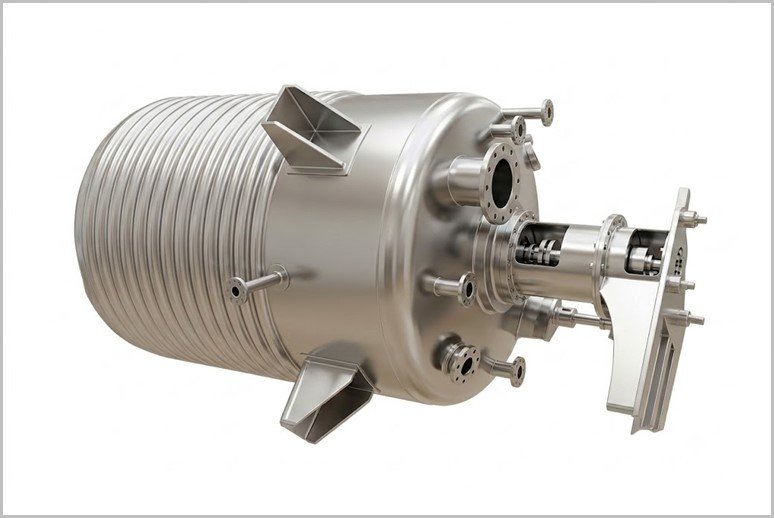
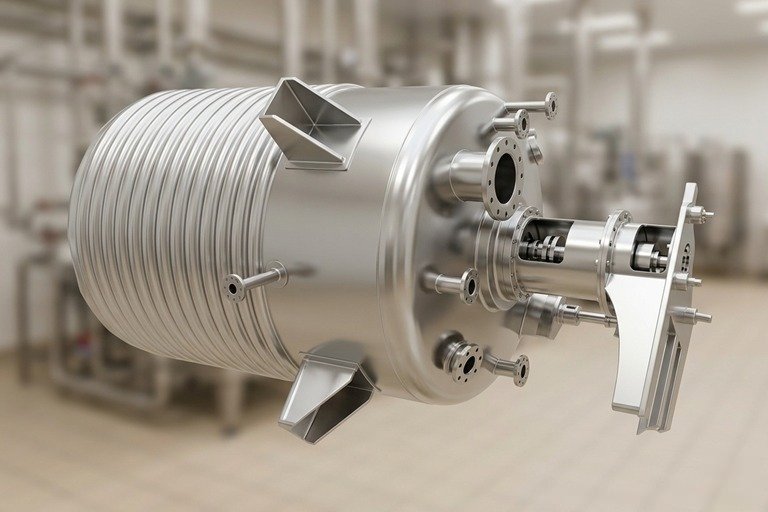
An Oil Heating Resin Reactor—frequently referred to as a thermal oil-heated reactor or hot oil jacketed reactor—is an advanced piece of heavy-duty industrial processing equipment. It is precision-engineered for the synthesis, mixing, and production of diverse polymer compositions, including unsaturated polyester resin, alkyd resin, epoxy resin, acrylic resin, and phenolic resin.
Across the chemical, pharmaceutical, paint, adhesive, and polymer sectors, these specialized reactors are vital. They drive complex chemical mechanisms such as polymerization, polycondensation, and esterification, where strict thermal regulation directly dictates the final product’s quality, molecular weight, and commercial viability.
Optimizing Plant Performance with Expert Manufacturing
How Oil Heating Works
Thermal oil is heated externally (e.g., by a gas/oil burner or electric heater) in a dedicated boiler and pumped through the reactor’s jacket or coils. The oil transfers heat to the reactor contents efficiently and returns to be reheated in a closed loop. This system offers advantages over steam or electric heating:
An Oil Heating Resin Reactor (also called a thermal oil-heated reactor or hot oil jacketed reactor) is heavy-duty industrial equipment designed for the synthesis, mixing, and production of polymer compositions such as unsaturated polyester resin, alkyd resin, epoxy resin, acrylic resin, and phenolic resin. It supports key chemical processes including polymerization, polycondensation, and esterification in the chemical, pharmaceutical, paint, adhesive, and polymer industries.
Thermal oil is heated externally (via a gas/oil burner or electric heater) in a dedicated boiler and circulated through the reactor’s jacket or coils. The oil transfers heat to the contents and returns in a closed loop for reheating. This provides efficient, uniform heating suitable for high-temperature processes while operating at low pressure.
The jacketed vessel is designed for thermal oil circulation that delivers uniform and precise heating up to 250–300°C (or higher in some configurations), making it ideal for high-temperature polymerization and resin synthesis.
The reactor is typically built from high-grade stainless steel (SS 304 or SS 316L) to ensure excellent corrosion resistance, product purity, and durability under demanding process conditions.
It is equipped with efficient agitator systems such as anchor, frame, turbine, or scraper types. These are specifically suited for handling high-viscosity materials common in resin production, ensuring thorough mixing and consistent product quality.
It features a double-end mechanical seal for leak-free, safe operation under vacuum or pressure conditions, along with external insulation that reduces heat loss and enhances operator safety.
An integrated condenser and water/oil separator enable efficient dehydration and byproduct removal during the reaction, supporting cleaner and more controlled process outcomes.
Precise temperature control is achieved via PID or PLC systems with multi-point temperature monitoring. The same jacket system also supports both heating and cooling for complete process flexibility.
Oil heating enables high operating temperatures at low system pressure (safer operation), delivers uniform heat distribution to prevent hotspots or material degradation, offers higher thermal efficiency with lower heat loss, eliminates steam-related issues such as corrosion and scaling, and supports flexible heating/cooling in a closed loop.
Yes. An optional vacuum system allows low-pressure operation to control molecular weight and reaction rates. The robust design supports both batch and continuous production, with multiple process nozzles (feed, discharge, vacuum, sampling, sight glass, manhole, etc.) for operational flexibility and easy cleaning/maintenance access.
More Other Machines
 Acrylic Resin Reactor
 Alkyd Resin Reactor
 Jacketed Reactor For Resin Paints
 Reaction Kettle For Saturated Resin Jacket Reactor
Algeria | Angola | Argentina | Australia | Austria | Bahrain | Bangladesh | Belarus | Belgium | Bolivia | Botswana | Brazil | Bulgaria | Canada | Chile | China | Colombia | Costa Rica | Cuba | Czech Republic | Denmark | Dominican Republic | Ecuador | Egypt | El Salvador | Ethiopia | Finland | France | Germany | Ghana | Greece | Guatemala | Haiti | Honduras | Hong Kong | Hungary | India | Indonesia | Iran | Ireland | Israel | Italy | Ivory Coast | Japan | Jordan | Kazakhstan | Kenya | Kuwait | Lebanon | Libya | Malaysia | Mexico | Mongolia | Morocco | Mozambique | Myanmar | Netherlands | New Zealand | Nicaragua | Nigeria | Norway | Oman | Pakistan | Panama | Paraguay | Peru | Philippines | Poland | Portugal | Qatar | Romania | Russia | Saudi Arabia | Senegal | Slovakia | Singapore | South Africa | South Korea | South Sudan | Spain | Sri Lanka | Sweden | Switzerland | Taiwan | Tanzania | Thailand | Trinidad and Tobago | Tunisia | Turkey | Uganda | Ukraine | United Arab Emirates | United Kingdom | United States | Uruguay | Uzbekistan | Venezuela | Vietnam | Zambia | Zimbabwe
Connect with our engineering team to discuss your specific production requirements. We provide customized, cGMP-compliant machinery solutions designed to optimize your manufacturing facility and maximize output.
©Adinath International | Theme Developed By Pharma Machinery Manufacturer I Website updated on: 15 October 2026
Request A Quick Quote
Oil Heating Resin Reactor
Please drop your requirements, one of our technical expert will contact you in next 24 working hours.
WhatsApp us
