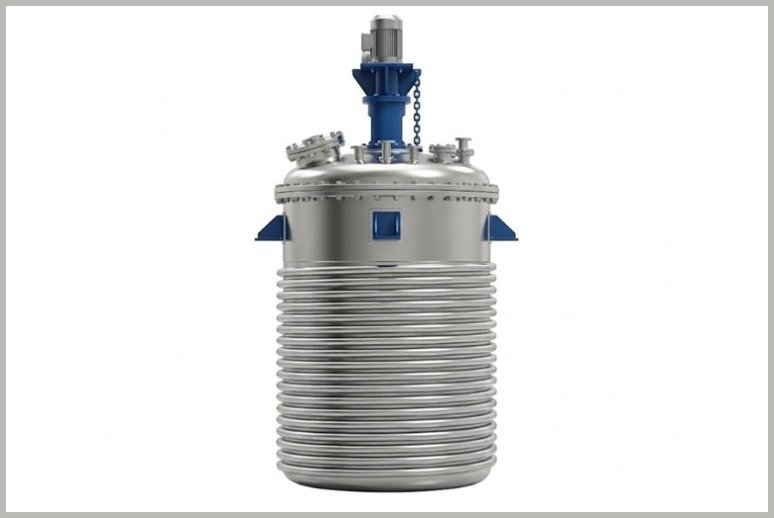

A Limpet Coil Reactor is an advanced, high-performance pressure vessel extensively utilized across the chemical processing, pharmaceutical, petrochemical, and specialty material sectors. Engineered specifically for handling complex chemical reactions that demand rigorous thermal management, this industrial reactor features an external, semi-circular half-pipe or channel welded directly onto the outer shell. This specialized configuration—known as a limpet coil—acts as a conduit for circulating heating or cooling media, such as high-temperature thermic fluids, hot oil, steam, or chilled water, ensuring optimal heat transfer to or from the reactants housed within.
Understanding the Etymology and Core Design
The nomenclature of the limpet coil stems from its striking structural resemblance to the marine limpet shell, a creature that clamps tightly onto ocean rocks. Similarly, the half-pipe coil is intimately and securely welded to the exterior surface of the reactor vessel.
From an engineering standpoint, this design maximizes structural integrity and surface contact. Unlike traditional full-jacketed vessels, a limpet coil reactor creates a confined, plug-flow channel for the thermal fluid. This configuration accelerates fluid velocity, mitigates stagnant zones, and produces rapid thermal response times—frequently displacing the heating or cooling medium in under a minute.
A Limpet Coil Reactor is an advanced high-performance pressure vessel used in chemical processing, pharmaceutical, petrochemical, and specialty material industries. It features an external semi-circular half-pipe or channel (limpet coil) welded directly onto the outer shell. This coil circulates heating or cooling media such as thermic fluids, hot oil, steam, or chilled water for precise thermal management of reactions inside the vessel.
The name comes from its structural resemblance to a marine limpet shell, which clamps tightly onto rocks. The half-pipe coil is welded intimately and securely to the exterior surface of the reactor vessel in a similar fashion.
Unlike traditional full-jacketed vessels, a limpet coil creates a confined plug-flow channel for the thermal fluid. This increases fluid velocity, reduces stagnant zones, delivers faster thermal response (often displacing the medium in under a minute), and supports higher jacket pressure ratings. The coils also act as structural stiffeners.
Key advantages include superior heat transfer from high fluid velocity and turbulence, higher pressure capability than full jackets, structural reinforcement that can allow thinner vessel walls, a completely clear vessel interior for easy cleaning/mixing/inspection, lower heating/cooling medium volume for quicker response, uniform temperature distribution, and suitability for high-temperature media (steam or thermic oil above 150°C). Multi-zone coil designs are also available for precise temperature profiling.
They are typically made from stainless steel grades SS 304 or SS 316, mild steel/carbon steel, or specialty alloys such as Hastelloy, depending on the process requirements for corrosion resistance and durability. The vessel is usually cylindrical with dished ends.
Yes. Double limpet coil configurations allow one coil set for heating and another for cooling in the same vessel, making it suitable for processes that require both functions or for managing exothermic and endothermic reactions with uniform temperature control.
It is widely used in the pharmaceutical, nutraceutical, herbal, Ayurvedic, biotech, cosmetic, and chemical industries. Typical applications include processing resins, paints, chemicals, pharmaceuticals, and polymerization reactions that demand rigorous thermal management, high pressure, or vacuum conditions.
The external half-pipe coils reinforce the shell (acting as stiffeners), potentially allowing thinner walls while maintaining strength. Because the coils are external, the vessel interior remains completely clear, enabling easy cleaning, mixing, inspection, and agitation without interference.
Common media include high-temperature thermic fluids, hot oil, steam, and chilled water. The design is particularly well-suited for media temperatures exceeding 150°C and supports high-pressure as well as vacuum applications with rapid response times due to the lower volume of circulating medium.
Limpet coils are more robust than internal coils because they do not interfere with agitation or occupy internal space. They provide targeted, efficient heat transfer on the exterior while keeping the process side fully accessible, making them preferable for many medium-to-high heat-transfer and high-pressure/temperature duties.
More Other Machines
 Limpet Coil Jacket Reactor
 Stainless Steel Jacketed Reactor With Limpet Coil
 Acrylic Resin Reactor
 Alkyd Resin Reactor
Algeria | Angola | Argentina | Australia | Austria | Bahrain | Bangladesh | Belarus | Belgium | Bolivia | Botswana | Brazil | Bulgaria | Canada | Chile | China | Colombia | Costa Rica | Cuba | Czech Republic | Denmark | Dominican Republic | Ecuador | Egypt | El Salvador | Ethiopia | Finland | France | Germany | Ghana | Greece | Guatemala | Haiti | Honduras | Hong Kong | Hungary | India | Indonesia | Iran | Ireland | Israel | Italy | Ivory Coast | Japan | Jordan | Kazakhstan | Kenya | Kuwait | Lebanon | Libya | Malaysia | Mexico | Mongolia | Morocco | Mozambique | Myanmar | Netherlands | New Zealand | Nicaragua | Nigeria | Norway | Oman | Pakistan | Panama | Paraguay | Peru | Philippines | Poland | Portugal | Qatar | Romania | Russia | Saudi Arabia | Senegal | Slovakia | Singapore | South Africa | South Korea | South Sudan | Spain | Sri Lanka | Sweden | Switzerland | Taiwan | Tanzania | Thailand | Trinidad and Tobago | Tunisia | Turkey | Uganda | Ukraine | United Arab Emirates | United Kingdom | United States | Uruguay | Uzbekistan | Venezuela | Vietnam | Zambia | Zimbabwe
Connect with our engineering team to discuss your specific production requirements. We provide customized, cGMP-compliant machinery solutions designed to optimize your manufacturing facility and maximize output.
©2012-2026 Adinath International | Theme Developed By Pharma Machinery Manufacturer I Website updated on: 23 November 2026
Request A Quick Quote
Limpet Coil Reactor
Please drop your requirements, one of our technical expert will contact you in next 24 working hours.
WhatsApp us
