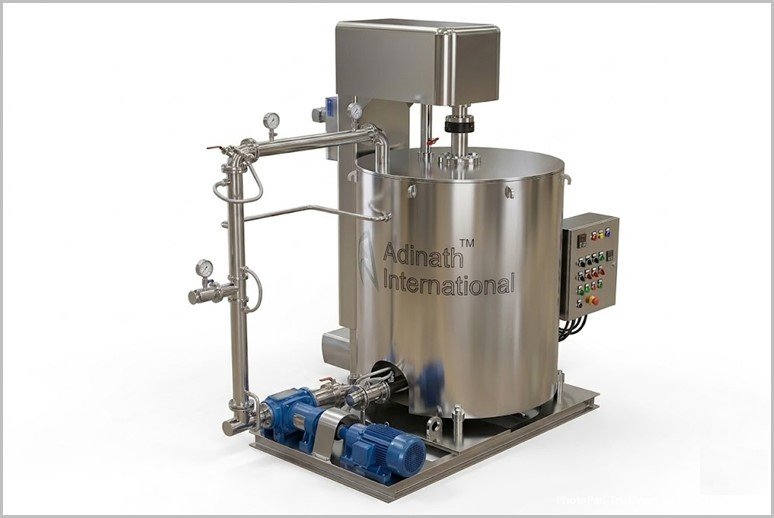
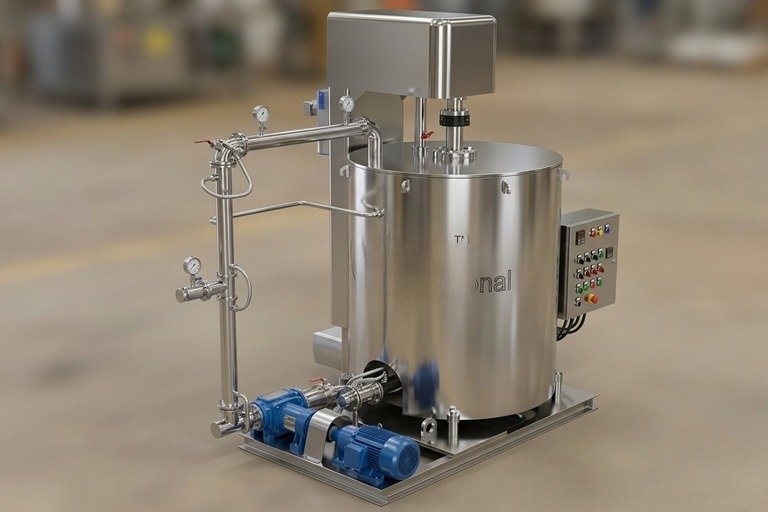
A pharmaceutical ball mill is a critical piece of machinery widely used in the pharmaceutical industry for efficient size reduction, grinding, and uniform mixing of raw materials. This versatile equipment plays a pivotal role in producing high-quality active pharmaceutical ingredients (APIs), excipients, and final drug formulations. Whether you’re looking for reliable solutions in tablet manufacturing, capsule production, or powder processing, understanding the ball mill in pharmaceutical industry is essential for optimizing production processes and ensuring product efficacy.
The pharmaceutical ball mill operates on a simple yet highly effective principle. It consists of a hollow cylindrical shell that rotates about its horizontal axis. This rotating drum is partially filled with grinding media—commonly known as balls—along with the materials to be processed. As the cylinder rotates, the balls cascade and tumble, creating impact and friction forces that crush and grind the materials into finer particles.
Grinding media used in pharmaceutical ball mills include stainless steel balls, ceramic balls, steel balls, and sometimes rubber balls, chosen based on the material’s sensitivity and contamination risks. The speed of rotation, ball size, ball-to-material ratio, and milling time are carefully controlled to achieve the desired particle size distribution. This precise control makes the pharmaceutical grinding mill ideal for producing micronized powders required in modern drug formulations.
The pharmaceutical ball mill operates on a simple yet highly effective principle. It consists of a hollow cylindrical shell that rotates about its horizontal axis. This rotating drum is partially filled with grinding media—commonly known as balls—along with the materials to be processed. As the cylinder rotates, the balls cascade and tumble, creating impact and friction forces that crush and grind the materials into finer particles.
Grinding media used in pharmaceutical ball mills include stainless steel balls, ceramic balls, steel balls, and sometimes rubber balls, chosen based on the material’s sensitivity and contamination risks. The speed of rotation, ball size, ball-to-material ratio, and milling time are carefully controlled to achieve the desired particle size distribution. This precise control makes the pharmaceutical grinding mill ideal for producing micronized powders required in modern drug formulations.
When selecting a ball mill for pharmaceutical use, factors such as capacity, material of construction, energy efficiency, and ease of validation matter significantly. Reputable manufacturers offer customizable options tailored to specific process requirements. Regular maintenance, proper calibration, and adherence to cleaning validation protocols are crucial to maintain product quality and equipment longevity.
In today’s competitive pharmaceutical landscape, where regulatory bodies like FDA and EMA emphasize Quality by Design (QbD), the pharmaceutical ball mill remains an indispensable tool. It not only supports efficient manufacturing but also contributes to developing innovative drug delivery systems with enhanced performance.
* Power voltage can be adjusted as per customer’s domestic power voltage requirements.
* Rights of technical improvements & modification reserved.
* Illustrations & dimensions are shown for information purpose only.
Investing in a high-quality pharmaceutical ball mill offers numerous advantages:
Modern pharmaceutical ball mills often incorporate advanced features like variable speed drives, temperature control jackets, and inert gas purging for processing oxygen-sensitive or heat-labile compounds.
A pharmaceutical ball mill is specialized equipment designed for efficient size reduction, grinding, and uniform mixing of raw materials. It is widely used to produce high-quality active pharmaceutical ingredients (APIs), excipients, and final drug formulations for tablet manufacturing, capsule production, and powder processing.
It consists of a hollow cylindrical shell that rotates about its horizontal axis. The drum is partially filled with grinding media (balls) and the materials to be processed. As the cylinder rotates, the balls cascade and tumble, generating impact and friction forces that crush and grind the materials into finer particles.
Common grinding media include stainless steel balls, ceramic balls, steel balls, zirconia balls, and sometimes rubber balls. The choice depends on the material’s sensitivity and the need to minimize contamination risks.
Yes. They are available in both dry and wet milling configurations, offering flexibility for different process requirements and materials.
Product-contact parts are typically constructed from SS 316 or SS 316L stainless steel to meet GMP requirements and ensure contamination-free operation.
Features include variable speed drives for controlling milling intensity, adjustable ball size and ball-to-material ratio, controlled milling time, and optional jacketed chambers for temperature-sensitive materials. These allow narrow particle size distribution suitable for modern drug formulations.
The mills feature sealed or closed systems to prevent dust emission and cross-contamination, are easy to clean and sterilize (CIP/SIP compatible in advanced models), include safety interlocks and overload protection, and have a compact, low-noise, vibration-damped design suitable for cleanroom environments.
It produces very fine, uniform powders; supports both wet and dry grinding; maintains sterility while handling hazardous substances in an enclosed system; is scalable from laboratory and pilot to production scales (batch or continuous); and improves bioavailability by increasing surface area for better drug dissolution and absorption.
It is used in the pharmaceutical, nutraceutical, herbal, Ayurvedic, biotech, cosmetic, and chemical industries for size reduction of powders, granules, and active ingredients, as well as uniform mixing.
Key considerations include capacity requirements, material of construction, energy efficiency, ease of validation, scalability (lab/pilot/production), and process-specific needs such as temperature control or inert gas purging. Regular maintenance, proper calibration, and adherence to cleaning validation protocols are also essential for GMP compliance and long-term performance.
Algeria | Angola | Argentina | Australia | Austria | Bahrain | Bangladesh | Belarus | Belgium | Bolivia | Botswana | Brazil | Bulgaria | Canada | Chile | China | Colombia | Costa Rica | Cuba | Czech Republic | Denmark | Dominican Republic | Ecuador | Egypt | El Salvador | Ethiopia | Finland | France | Germany | Ghana | Greece | Guatemala | Haiti | Honduras | Hong Kong | Hungary | India | Indonesia | Iran | Ireland | Israel | Italy | Ivory Coast | Japan | Jordan | Kazakhstan | Kenya | Kuwait | Lebanon | Libya | Malaysia | Mexico | Mongolia | Morocco | Mozambique | Myanmar | Netherlands | New Zealand | Nicaragua | Nigeria | Norway | Oman | Pakistan | Panama | Paraguay | Peru | Philippines | Poland | Portugal | Qatar | Romania | Russia | Saudi Arabia | Senegal | Slovakia | Singapore | South Africa | South Korea | South Sudan | Spain | Sri Lanka | Sweden | Switzerland | Taiwan | Tanzania | Thailand | Trinidad and Tobago | Tunisia | Turkey | Uganda | Ukraine | United Arab Emirates | United Kingdom | United States | Uruguay | Uzbekistan | Venezuela | Vietnam | Zambia | Zimbabwe
Connect with our engineering team to discuss your specific production requirements. We provide customized, cGMP-compliant machinery solutions designed to optimize your manufacturing facility and maximize output.
©Adinath International | Theme Developed By Pharma Machinery Manufacturer I Website updated on: 01 September 2026
WhatsApp us
