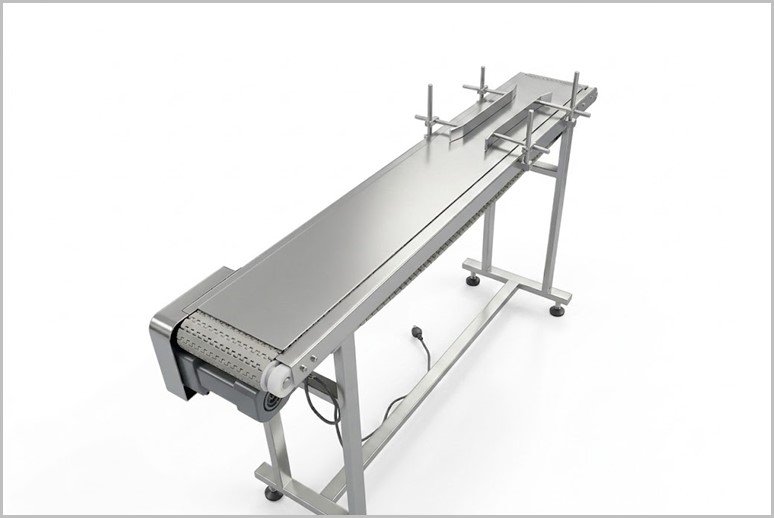
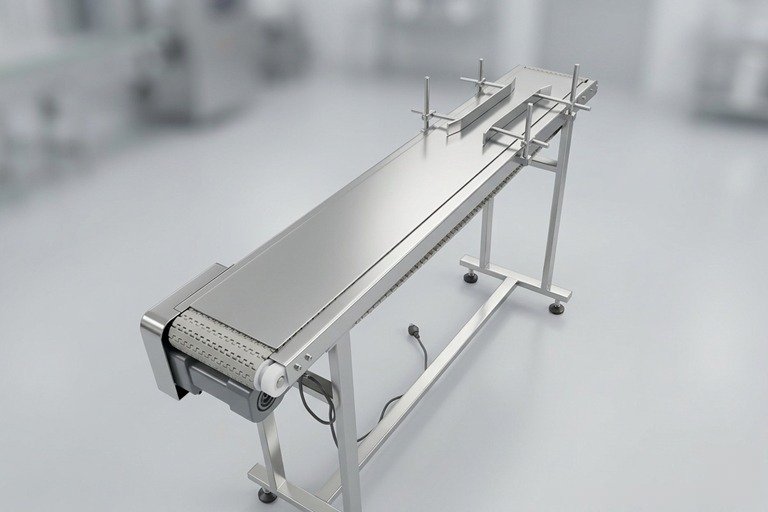
A rubber belt conveyor is a highly efficient type of belt conveyor system that employs a continuous loop of rubber or rubber-compounded belt as the primary carrying medium. This design enables the smooth, continuous transport of bulk materials, packaged goods, or unit loads from one point to another across industrial facilities. Widely regarded as one of the most common and versatile material handling solutions, rubber belt conveyors form the backbone of operations in mining, manufacturing, food processing, logistics, agriculture, and recycling plants worldwide.
At its core, the system consists of a reinforced rubber belt that travels over a series of rollers or idlers, driven by a motorized pulley. The belt forms an endless loop, supported by a robust frame structure. Material is loaded onto the belt at the infeed point and discharged at the desired destination, either through gravity, plows, or specialized discharge mechanisms. The rubber surface provides excellent grip, flexibility, and resistance to abrasion, impact, and environmental factors, making it suitable for both horizontal and inclined conveying over short or long distances.
What distinguishes rubber belt conveyors is the composition of the belt itself. Modern belts typically feature multiple layers of fabric or steel cord reinforcement embedded within high-quality rubber compounds. Cover compounds can be customized—abrasion-resistant for heavy minerals, oil-resistant for chemical environments, heat-resistant for foundries, or food-grade for hygienic applications. This adaptability ensures the conveyor performs reliably under demanding conditions while complying with industry standards for safety and durability.
From an operational standpoint, these systems deliver significant advantages. They offer continuous, high-capacity throughput with relatively low energy consumption compared to alternative methods such as pneumatic or screw conveyors. The continuous loop minimizes spillage and product degradation, preserving material integrity. Modular designs allow easy extension, inclination adjustments, or integration with other equipment like hoppers, crushers, or sorting stations. Noise levels remain moderate, and with proper guarding, they meet stringent workplace safety requirements.
Industries rely on rubber belt conveyors for their proven track record. In mining and aggregates, heavy-duty versions move crushed stone, ore, and coal over long distances. Manufacturing plants use them for assembly lines and component transfer. Food and pharmaceutical facilities employ sanitary designs with easy-clean surfaces. Warehouses and distribution centers deploy lighter versions for package handling. Their versatility extends to outdoor installations where weather-resistant covers protect against UV, moisture, and temperature extremes.
Expertise in selecting and maintaining rubber belt conveyors is essential for long-term performance. Factors such as belt width, speed, troughing angle, tensioning systems, and drive power must be carefully calculated based on material characteristics, capacity requirements, and layout constraints. Proper installation by experienced technicians, combined with routine inspection of splices, rollers, and belt tracking, dramatically extends service life and reduces unplanned downtime. Predictive maintenance practices—monitoring wear patterns and using quality replacement parts—further enhance reliability and return on investment.
Trust in rubber belt conveyor technology stems from decades of field-proven performance and continuous innovation. Leading manufacturers adhere to international standards for belt construction, fire resistance, and operational safety. When sourced from reputable suppliers and engineered for the specific application, these systems deliver consistent, cost-effective material flow that supports productivity goals.
In summary, a rubber belt conveyor represents far more than a simple transport device. It is a foundational element of modern industrial material handling—engineered for durability, adaptable across sectors, and optimized for efficiency. Businesses seeking scalable, low-maintenance solutions for moving materials safely and economically continue to choose rubber belt conveyors as a trusted standard. Proper specification, professional installation, and disciplined maintenance ensure these systems provide years of dependable service while supporting operational excellence and workplace safety.
The belt forms a closed loop around the pulleys. When the drive pulley rotates (powered by a motor), friction moves the belt, carrying materials placed on the top surface. Rubber belts provide excellent grip, especially for irregular or small items that might slip on other surfaces.
Belt Width | Tailored (depends on product dimensions) |
Belt Speed | Customized according to production requirement |
Material | SS (Stainless steel) 304/SS 316 |
Electricity | 3-phase: 415v; 50Hz |
Machine Length | Length can vary depending on industry needs |
* Power voltage can be adjusted as per customer’s domestic power voltage requirements.
* Rights of technical improvements & modification reserved.
* Illustrations & dimensions are shown for information purpose only.
A typical rubber belt conveyor consists of:
A rubber belt conveyor is a highly efficient belt conveyor system that uses a continuous loop of rubber or rubber-compounded belt as the primary carrying medium. It enables smooth, continuous transport of bulk materials, packaged goods, or unit loads across industrial facilities and is widely used in mining, manufacturing, food processing, logistics, agriculture, and recycling.
The belt forms a closed loop around the pulleys. When the drive pulley (powered by a motor) rotates, friction moves the belt, carrying materials placed on the top surface. Rubber belts provide excellent grip, especially for irregular or small items.
Key components include the reinforced rubber belt (often with fabric or steel cord layers), pulleys/drums (one powered drive pulley and others for tensioning/redirection), idlers/rollers that support the belt and load, a robust frame/structure, and a drive system consisting of an electric motor and gearbox.
The structure is available in S.S. (Stainless Steel) 304 or M.S. (Mild Steel) models, typically using 32 mm square pipe with matt finish or paint. The table top is made of S.S. 304 16-gauge sheet with matt finish. Belts are PVC-coated canvas or endless rubberized belts, and the overall machine material options include SS 304/SS 316.
Yes. They are available according to required speed, length, height, and width. Belt width is tailored to product dimensions, belt speed is customized to production needs, and machine length varies depending on industry requirements. Power voltage can also be adjusted to match domestic requirements.
Notable features include availability in S.S./M.S. models; a reduction gear box for jerk-less and noiseless long-term performance; a conveyor belt supplied with a 3-speed pulley; special self-aligning bearings for smooth, trouble-free roller rotation; and a durable structure with matt-finished or painted finishes.
They are used in the pharmaceutical, nutraceutical, herbal, Ayurvedic, biotech, cosmetic, and chemical industries. Broader applications also include mining and aggregates, manufacturing assembly lines, food processing, warehouses/distribution centers, and outdoor installations requiring weather-resistant covers.
They deliver continuous high-capacity throughput with relatively low energy consumption, minimize spillage and product degradation, offer modular designs for easy extension or integration with other equipment, maintain moderate noise levels, and provide excellent resistance to abrasion, impact, and environmental factors when proper covers are selected.
Belt width and speed are customized; material is SS 304/SS 316; electricity is 3-phase 415 V, 50 Hz (adjustable); and machine length varies by need. Technical improvements and modifications are reserved by the manufacturer.
Modern belts feature multiple layers of fabric or steel cord reinforcement embedded in high-quality rubber compounds. Cover compounds can be customized for abrasion resistance (heavy minerals), oil resistance (chemical environments), heat resistance (foundries), or food-grade hygiene, ensuring suitability for both horizontal and inclined conveying over short or long distances.
Algeria | Angola | Argentina | Australia | Austria | Bahrain | Bangladesh | Belarus | Belgium | Bolivia | Botswana | Brazil | Bulgaria | Canada | Chile | China | Colombia | Costa Rica | Cuba | Czech Republic | Denmark | Dominican Republic | Ecuador | Egypt | El Salvador | Ethiopia | Finland | France | Germany | Ghana | Greece | Guatemala | Haiti | Honduras | Hong Kong | Hungary | India | Indonesia | Iran | Ireland | Israel | Italy | Ivory Coast | Japan | Jordan | Kazakhstan | Kenya | Kuwait | Lebanon | Libya | Malaysia | Mexico | Mongolia | Morocco | Mozambique | Myanmar | Netherlands | New Zealand | Nicaragua | Nigeria | Norway | Oman | Pakistan | Panama | Paraguay | Peru | Philippines | Poland | Portugal | Qatar | Romania | Russia | Saudi Arabia | Senegal | Slovakia | Singapore | South Africa | South Korea | South Sudan | Spain | Sri Lanka | Sweden | Switzerland | Taiwan | Tanzania | Thailand | Trinidad and Tobago | Tunisia | Turkey | Uganda | Ukraine | United Arab Emirates | United Kingdom | United States | Uruguay | Uzbekistan | Venezuela | Vietnam | Zambia | Zimbabwe
Connect with our engineering team to discuss your specific production requirements. We provide customized, cGMP-compliant machinery solutions designed to optimize your manufacturing facility and maximize output.
©Adinath International | Theme Developed By Pharma Machinery Manufacturer I Website updated on: 15 October 2026
Request A Quick Quote
Rubber Belt Conveyor
Please drop your requirements, one of our technical expert will contact you in next 24 working hours.
WhatsApp us


