
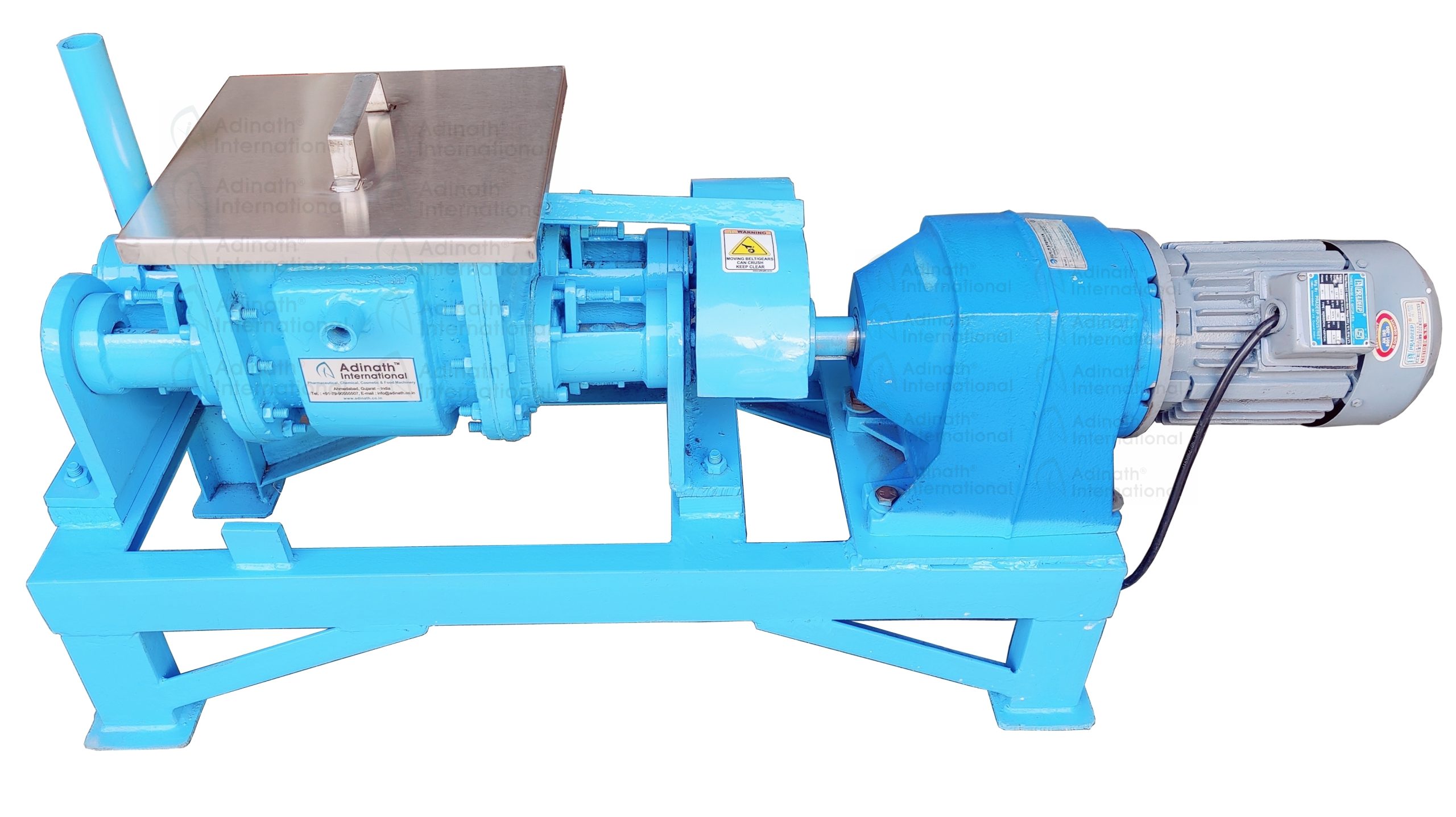
A Laboratory Blade Sigma Mixer (also known as a lab sigma blade mixer, sigma kneader, Z-blade mixer, or double-arm kneader) is a compact, small-scale mixing machine designed for research, development, and pilot testing of high-viscosity materials.
Laboratory Blade Sigma Mixer Video
Key Features and Design
-
It features two counter-rotating sigma-shaped (Z-shaped) blades mounted horizontally in a W-shaped or double-trough mixing chamber.
-
The blades intermesh or operate tangentially at close clearances (often ~2 mm), creating intense shearing, kneading, folding, stretching, and compressing actions.
-
This results in thorough, homogeneous mixing even in small batches (typically 1–50 liters, e.g., 1/4 gallon to 5–10 gallons working capacity).
-
Common materials: Stainless steel construction for durability and easy cleaning, often with jackets for heating/cooling, variable speed drives, and options for vacuum operation or extrusion discharge.
How It Works
The blades rotate at differential speeds (one faster than the other), pulling material from the ends toward the center, squeezing it against the trough walls and saddle (central ridge), and shearing it between the blades. This combination of bulk movement and high shear ensures uniform dispersion without dead spots, ideal for sticky, dough-like, or elastoplastic substances.
Applications
It is widely used in laboratories for:
-
Pharmaceuticals (e.g., pastes, ointments)
-
Chemicals (e.g., sealants, adhesives, resins)
-
Food (e.g., chewing gum base, doughs, chocolate)
-
Rubber/silicone compounding
-
Ceramics, pigments, and batteries
Salient Features of Sigma Mixer Machine
-
Available in Stainless Steel 316, Stainless Steel 304 and Mild Steel materials.
-
Stainless Steel polish to matt & mirror finish as per customer’s requirements.
-
Mild Steel finish with one coat of red oxide and two coats of epoxy paint.
-
Discharge option of hand wheel operated (manual) or hydraulic operated (automatic) offered.
-
Jacket for heating or cooling application can be offered.
-
Mineral wool insulation with cladding on jacket.
-
Tangential designed ‘Z’ blades offered for uniform mixing.
-
PTFE made shaft sealing provided for food grade compatibility.
-
Minimum gap between trough inner shell & blades removes possibility of sticking product.
-
On demand Spray system, vacuum system
Optional Features/Accessories of Sigma Mixer
-
Liquid Spray System
-
Vacuum System
-
Blades Cooling Arrangement
-
Screw System
-
Automatic Valve Discharge System
Process Operation of Laboratory Blade Sigma Mixer
In Sigma mixer tangential action of mixing and kneading obtained by ‘Z’ type (SIGMA) shaped kneading blades, which rotates very accurately at different speed towards each other causing product to be transferred from one end to another end. Discharge of the finished product is achieved by tilting the container or through the valves at the bottom or by means of an extrusion screw beside the container.
The mixing action is a combination of bulk movement, stretching, folding, dividing, and recombining of the material. The shearing & tearing action of the material against blades and the side walls causes size reduction of the solids. After the time period required for sterilizing the batch has elapsed, the heating circuit shuts of the pneumatics damper (exhaust) opens and cooling operation commences.
In the tangential design, the blades rotate in the trough meeting tangentially. The front blade generally rotates faster than the rear blade usually in the ratio of 3:2. Tangential blades are generally used for material of higher viscosities such as adhesives, rubber compounds, flush colors, dyes, and pigments.
In the overlapping design, the blades overlap above the saddle of the container. Due to the overlapping action, it is necessary that the relative position of the two blades is unchanged, and as a result, both the blades rotate at the same speed. Materials that flow freely or creep down into the blades are mixed using the overlapping blade action. This design offers a faster interchange of material from one blade compartment of the mixer to the other. Overlapping blade action is used for materials of lighter viscosities such as carbon pastes, clay coating, creams, and ointments. The overlapping blade produces a lower kneading and shearing compared to the tangential blade action.
Technical Specification of Sigma Mixer Kneader
| Model | Capacity – Liters | Motor (H.P.) | ||
| Working Capacity approx. | Gross Capacity approx. | General | Heavy Duty | |
| ASM – 5 | 5 Liters | 8 Liters | 1 H.P. | 1.5 H.P. |
| ASM – 10 | 10 Liters | 15 Liters | 1 H.P. | 1.5 H.P. |
| ASM – 20 | 20 Liters | 30 Liters | 1.5 H.P. | 3 H.P. |
| ASM – 50 | 50 Liters | 80 Liters | 5 H.P. | 7.5 H.P. |
| ASM – 75 | 75 Liters | 110 Liters | 7.5 H.P. | 10 H.P. |
| ASM – 100 | 100 Liters | 150 Liters | 10 H.P. | 15 H.P. |
* Power voltage can be adjusted as per customer’s domestic power voltage requirements.
* Rights of technical improvements & modification reserved.
* Illustrations & dimensions are shown for information purpose only.
Send Inquiry